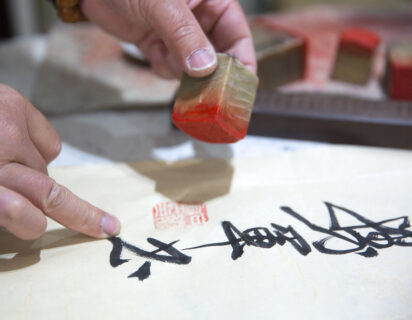

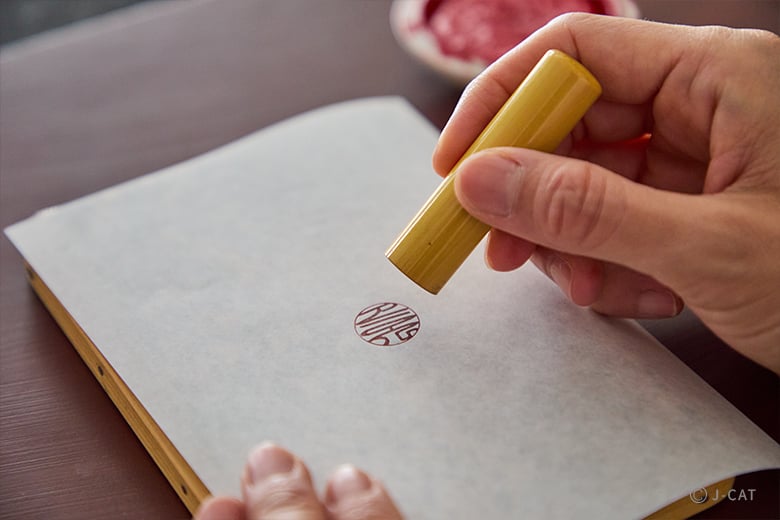
Japan runs on paper. And on that paper, somewhere near the signature line — or instead of it — sits a small red circle.
If you have spent any time in Japan, you have seen the hanko. It appears on lease agreements, bank forms, delivery slips, workplace attendance sheets, school permission forms, and government documents. For many foreigners arriving in Japan, the stamp feels like a charming anachronism at first. Then they need to open a bank account, sign a rental contract, or start a new job — and it stops being charming and starts being a practical question: do I need one of these, and why does Japan still use them?
Understanding why Japan uses hanko takes about five minutes of history and about ten minutes of walking around any city hall. This post covers both. It also explains where stamps appear in everyday life today, what the genuine trade-offs of stamp culture are, and how foreigners can navigate the system with confidence rather than confusion.
The history in 5 minutes
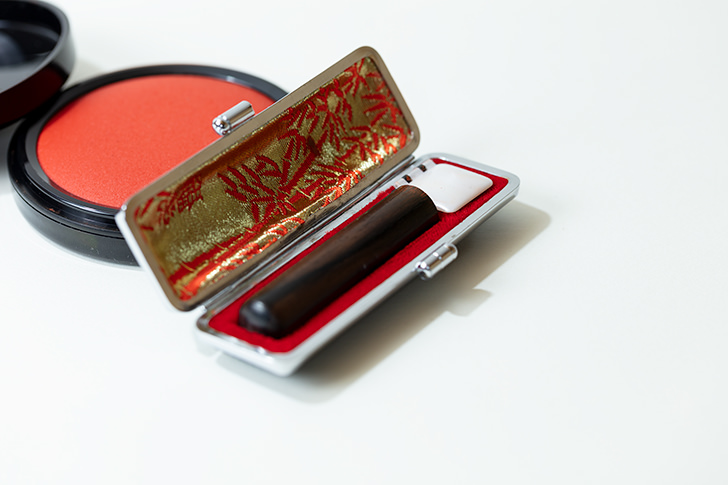
The hanko arrived in Japan from China, where seal culture had already been established for centuries. The earliest recorded use of official seals in Japan dates to around the 7th century, during the Asuka period, when the imperial court adopted Chinese administrative practices wholesale. Seals at that time were instruments of state — used by officials to authenticate imperial edicts, land records, and formal correspondence.
For most of Japanese history, seals remained the domain of the powerful. Ordinary people did not use them. The shift came during the Meiji era (1868–1912), when the new government set about modernizing Japan’s administrative and legal systems at speed. As part of this reform, the government formalized the inkan torokusho system — the registered seal system — and extended it to the general population. The 1873 Seal Registration Law (印鑑条例) effectively made the hanko a mass institution. Citizens were required to register an official seal with their local government, and that registered seal — the jitsuin — became the legally recognized stand-in for a personal signature on binding documents.
The timing matters. Japan industrialized rapidly and built its modern bureaucracy during an era when the pen-and-ink signature was the Western norm, not a global one. Japan chose a different path, and it built entire legal, administrative, and commercial systems around that choice over the following 150 years.
Those systems do not dissolve quickly.
By the postwar economic boom, hanko use had embedded itself deeply into corporate culture. Companies developed their own internal approval workflows — the ringi system — where documents circulated through layers of management, each person pressing their seal to indicate review and sign-off. This was not mere formality. It was organizational memory: a stamped document told you exactly who had seen it, in what order, and when.
That institutional logic is one reason hanko culture has proved more durable than many expected when digital alternatives arrived.
Where you’ll see stamps today
Japan bureaucracy still runs on stamps in ways that surprise newcomers. Here is an honest inventory of where you are likely to encounter them.
City hall and ward office (区役所 / 市役所) Residency registration, address change notifications, certificate requests, tax filings — many of these still accept or expect a hanko. Some procedures have shifted to digital or accept a signature in lieu of a seal, but the pace varies by municipality and by document type.
Banking Opening a bank account in Japan commonly requires a hanko. Most major banks still have a dedicated seal registration step during account setup. Your seal impression is kept on file and used to verify withdrawal slips or contract changes. Some newer digital banks (like Paypay Bank or Rakuten Bank) have relaxed this requirement, but traditional banks, including Japan Post Bank, typically still ask for one.
Housing and rental agreements Lease contracts in Japan are almost universally stamped. Your landlord will stamp, the real estate agent will stamp, and you will be expected to stamp. Multiple copies means multiple rounds of stamping. A foreigner showing up to sign a lease with only a signature is not uncommon — and is sometimes accepted — but it can slow things down.
Workplace onboarding New employee paperwork often includes stamped sections. Internal approval forms, expense claims, and official HR documents frequently circulate with seal fields. If you are a self-employed Japan worker or freelancer submitting invoices, your clients may expect your seal on the document.
Parcel delivery This one surprises people. When a delivery driver asks you to confirm receipt of a package, they may offer a stamp pad instead of — or alongside — a signature form. It is a small moment, but it illustrates how deeply inkan culture has seeped into everyday life, well below the level of legal formality.
Schools and community organizations Permission slips, club enrollment forms, neighborhood association documents — stamps appear here too, often in contexts that feel more social than official.
A micro-scenario that captures the range: a foreign teacher working at a Japanese junior high school finds a weekly system where she stamps a printed attendance log, a lesson plan sign-off sheet, and a petty cash request form — all before 9am on Monday. None of these are legally binding. All of them are expected.
Pros/cons of stamp culture
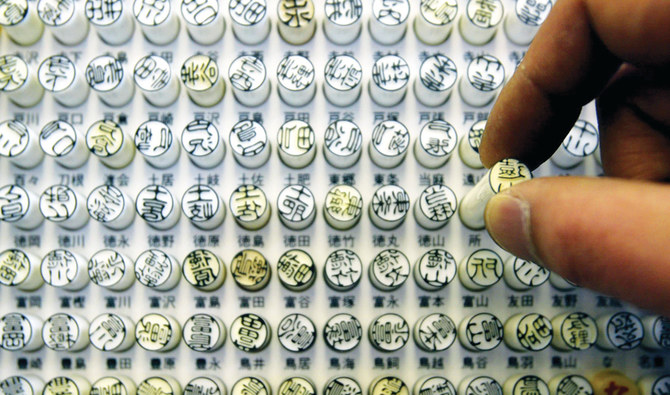
It is easy to be dismissive of hanko culture from the outside — “just use a signature, it’s faster” — but that view misses both what the system does well and what it genuinely struggles with.
What works well
Seals create a clear, physical record. In a culture that values documented consensus and careful process, the visible trail of stamped approvals is not bureaucratic waste — it is organizational transparency. Everyone who reviewed a document is identifiable. No one can claim they did not see something.
Stamps are also consistent. A well-made hanko produces the same clean impression every time, in a way that handwriting does not. For document archiving purposes, this is genuinely useful.
There is also a psychological weight to the physical act of stamping that digital clicks do not replicate. In Japanese workplace culture, pressing your seal is a deliberate act. It communicates that you read the document, take responsibility, and are committing in a way that feels more considered than a typed name.
What does not work as well
The obvious friction point is that hanko are physical objects. You need the stamp to be where you are. If you forgot it, you cannot sign. If it is lost or stolen, the implications are serious — your registered jitsuin carries legal authority, and replacing it requires formal procedures at the ward office.
The system also places significant trust in possession over identity. If someone else has your seal, they can potentially use it on your behalf — and proving they did so without your consent is not simple. Signatures at least carry biometric variation; stamps do not.
paperwork in Japan can also feel inaccessible to newcomers precisely because the stamp requirement adds a procedural step that is invisible until you are in the middle of it. Showing up to a bank appointment without a hanko, only to be turned away, is a frustrating rite of passage for many new residents.
The ongoing reform debate is genuine. Since 2020, Japan has accelerated digital transformation efforts, and the government has officially reduced hanko requirements in hundreds of administrative procedures. But “reduced” is not “eliminated,” and habits formed over 150 years of institutional culture are not erased by policy announcements.
How foreigners can adapt
The good news is that adapting to stamps in Japan is simpler than it looks from the outside. The key is knowing which situations require preparation and which allow flexibility.
Getting your own hanko
For anyone staying in Japan beyond a short visit — whether you are a new resident, a working professional, or a long-term digital nomad — having a personal hanko removes friction from a surprising number of daily encounters. You do not need a registered jitsuin to start. A mitomein (認め印), which is an unregistered personal seal, handles the vast majority of everyday needs: bank accounts at some institutions, workplace documents, delivery receipts, and standard contracts.
Checklist for getting set up:
- Decide on the name to use: your family name in katakana is the most conventional choice for foreign residents
- Choose a size: 13.5mm is the standard for adult personal use
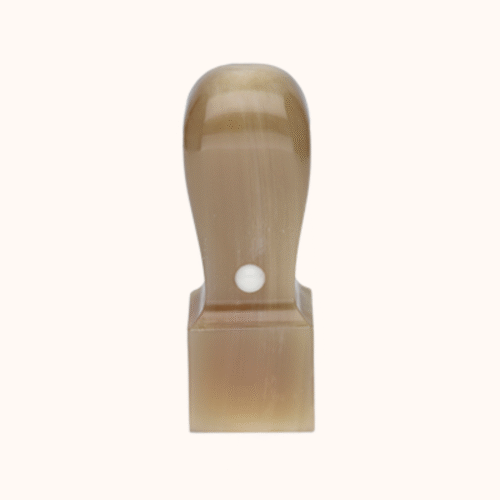
- Choose a material: acrylic is affordable and durable; wood and horn are traditional and longer-lasting
- Order from a vendor who handles foreign name transliterations accurately
- Once received, test the impression on plain paper before using it on any official document
- If you eventually need a jitsuin, register it at your local ward office (区役所) with your residence card and the seal
When a signature is acceptable
Japan has been gradually accepting signatures in more contexts, especially in dealings with international companies, larger corporations, and digital-first services. If you are uncertain, it is reasonable to ask. Most Japanese counterparts will tell you directly if a seal is expected. When in doubt, having the hanko available and offering it is almost always received positively.
Understanding the registered seal system
If you become a legal resident and anticipate significant transactions — purchasing property, setting up a business entity, signing major contracts — registering a jitsuin at your ward office is worth understanding. The process is straightforward: you bring the seal you want to register, your residence card (在留カード), and fill out a form. The ward office records your seal impression and issues you an inkan torokusho (印鑑登録証). When a party asks for certified proof of your seal registration (印鑑証明書), you can obtain a certificate from the ward office.
A micro-scenario: a foreign entrepreneur setting up a sole proprietorship in Japan is surprised to discover that even relatively modest contracts with local suppliers may come with stamp fields. Having both a mitomein for daily use and a registered jitsuin for formal agreements means he can handle the full range without scrambling.
If you plan to work in Japan, ComfysCareer‘s guides help you navigate paperwork — and this post explains why stamps still appear in that process.
Practical mindset
Treat the hanko not as an obstacle but as a cultural key. Foreigners who engage with Japanese administrative norms — rather than pushing back against them — tend to build trust with landlords, employers, and officials more quickly. A simple, well-made seal communicates that you took the time to understand how things work here. That signal matters more than most people expect.
FAQ
Is the hanko legally the same as a signature in Japan?
For most purposes, yes — a seal impression on a document carries the same legal weight as a handwritten signature. For the highest-stakes transactions, a registered jitsuin with a certificate of registration (印鑑証明書) provides additional authentication. Unregistered seals (mitomein) are accepted for a wide range of everyday documents but do not carry the same certified weight.
What happens if I lose my registered hanko?
Report it to your ward office immediately and apply to cancel the registration. Until the cancellation is processed, someone with your seal could potentially use it on documents. After cancellation, you can register a new seal. This is one of the genuine vulnerabilities of the physical seal system.
Can a foreigner register a jitsuin in Japan?
Yes, if you are a registered resident with a valid residence card (在留カード). You bring your seal and ID to the ward office, complete the registration form, and your seal impression is added to the registry. Non-residents cannot register a jitsuin, as it is tied to the resident registration system.
Are hanko still required at Japanese banks?
It varies by institution. Traditional banks — including megabanks and Japan Post Bank — commonly still require a hanko for account opening. Some newer digital banks have removed this requirement. If in doubt, check the specific bank’s requirements before your appointment, and bring a hanko anyway as a precaution.
Is Japan actually getting rid of hanko?
Not entirely, and not quickly. Government reform efforts since 2020 have removed hanko requirements from a large number of administrative procedures, and some local governments have gone further. But private-sector adoption is uneven, and many companies, landlords, and institutions have not changed their internal processes. For the foreseeable future, having a hanko in Japan is practical insurance.
Is a hanko a good souvenir from Japan?
Genuinely, yes. A custom-made hanko with your name in katakana or a design meaningful to you is a functional, lasting object that connects to a centuries-old tradition. It is quite different from most souvenir options. If you are a tourist who wants something that carries real cultural weight, a hanko from a reputable maker is one of the more thoughtful things you can bring home.
Next steps

Whether you are moving to Japan, already living there, or just want to understand the culture more deeply — having your own hanko is one of the most direct ways to engage with a tradition that still shapes daily life across the country.
HankoHub makes custom hanko for foreign names, with options for different sizes, materials, and uses — from practical daily-use mitomein to more considered designs worth keeping for years. If you want to experience the tradition firsthand, it is a good place to start.